 |
A nature park in Bintulu 
In the year 2013, an ecopreneur I became. Is there a time in your life that you can have the greatest fun doing what you love? I have, and that happened in 2013 when I decided to call my eco-farm in Bintulu - the Kambatik Park. It is the culmination of my strengths in landscaping, writing, photography, wildlife, aesthethics, planning, entrepreneurship, healthy life style, and passion in plants and life-long learning. Here I build an eco-model for the cultivation of oil palm. The sub-heading of the Kambatik Park's blog reads:" A private nature park developed by MOOD based on the principles of ecological diversity, oil palm integrated agro-forestry practices and Kambatik landscape design philosopohy and aesthethics". You don't have to visit the park to experience it. Making use of internet technology I blogged on the development and happenings at the park for the whole world to see. It has been more than two years since and the story and discoveries keep on coming. My ultimate vision is to see the model adopted along the 1000 km length of Sarawak trunk road such that it become a chain of 'kambatik park', the longest nature parkland developed by rural entrepreneurs in Sarawak.
Sarawak - you are just so beautiful.
Happy Malaysia Day, Sarawak.
( This is the 13th and final posting for my writing contribution on what it is meant to be a Malaysian as a way for me to celebrate Malaysia Day this year, 2015)
|
Showing posts with label 2013. Show all posts
Showing posts with label 2013. Show all posts
Monday, April 27, 2020
In the year 2013, an Ecopreneur I became

Flowering today at the park

The Senduduk or Straits rhododendron (Melastoma malabathricum) ( See pic at inset) grows wild and natural at the park and is visited by many birds and insects. They are a hardy pioneering species and are very attractive to wildlife. The Asian rosebay (Tabernaemontana divaricata) is another hardy shrub that has slightly fragrant white flowers. And then there's the once common but now more difficult to see local orchid called Bromheadia finlaysoniana. This is a terrestrial orchid that grow into a small bush with white fragrant flowers held singly or in pairs on tall stalks.

Tabernaemontana divaricata (Asean rosebay)
Syn : Ervatamia divaricata, E. coronaria)
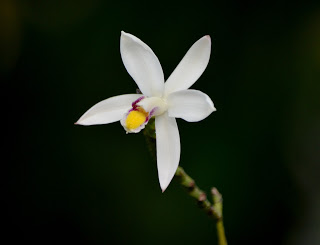
Bromheadia finlaysoniana
( Re-post from my blog " The Kambatik Park, Bintulu" - https://kambatikpark.blogspot.com/2013/06/flowering-today-at-park.html )
Broad leaves in the landscape

 |
| Broad leaves of the Breadfruit (Artocapus altilis) or Sukun in Malay at left and Banana leaves at right |
 |
| Calathea crotalifera - Rattle snake plant |
 |

Terap in Malay or Lumok in Bintulu Melanau (Artocarpus odoratissimus
 Shrubby dillenia or Simpoh air in Malay (Dillenia suffructicosa ( Re-post from my blog " The Kambatik Park, Bintulu" - https://kambatikpark.blogspot.com/2013/06/broad-leaves-in-landscape.html ) |
Leave the grasses alone
 |
| Zone B, view looking west |

 |
| Zone B, view looking south |
 |
| Zone B, view looking south (Re-post from my blog "The Kambatik Park, Bintulu" - https://kambatikpark.blogspot.com/2013/12/leave-grasses-alone.html |
Sunday, April 26, 2020
Bintulu Golf Course - 2nd Nine (Hole 18)

Hole 18 - showing part of the fairway closer to the beach (February 1987)
The turves are of Axonopus compressus grass and the trees and bushes at the left of the picture is the OB or rough area.
Picture is taken in February 1987 when all turfing works were already well-grown, but the course still not opened for public.

Date taken 26 December, 2013.
Note the developments at the beach area nearby the fairway. A coastal scenic road runs along the golf course boundary by the seaside. This road is an alternative route from Bintulu town to Kidurong township.
There is land reclamation works in the sea beyond the road started a few years ago and still ongoing.
One of the strong points of the Bintulu Golf Course especially its 2nd Nine is its prime location by the seaside. The Hole 18 fairway was cleared of its jungles in 1986. The green was turfed with Tiff dwarf grass in late 1986 and the fairway was planted with 'cow grass' or Axonopus compressus. In February 1987 all turfing works to the Hole 18 green and fairway were completed and thereafter regularly maintained. In early 1988 the BGC was almost ready to be used fully with all 9 holes (Hole 10 - 18) well maintained for play. Since its construction in 1986 till today, the Bintulu Golf Course remains the only golf course in Bintulu town.
( Re-post from my blog "Images of Bintulu-Before and Now" - https://bintulub4now.blogspot.com/2013/12/bintulu-golf-course-2nd-nine-hole-18.html )
Bintulu Golf Course - 2nd nine (Hole 17)

View of Hole 17, taken on 22 February 1987

View of Hole 17, taken on 16 September 2013.
One of my adventures in life is in my involvement in the planing, construction, planting and maintenance of the Bintulu Golf Course. The top picture was taken in 1987 when the earthworks for Hole 17 was still in progress. Today I took another look at the location where I stood before to see how the place look at present. The fairway of Axonopus compressus grass looks nicely cut and well grown with lots of greenery especially at the backdrop of the green. The right slope is well landscaped with large and medium-sized trees. Note the pencil-like trees on the left which are the Mast tree or 'Mempisang' (Polyalthia longifolia). For more stories about the early beginnings of the course, check it out in my blog here ...>>>http://mysarawak2.blogspot.com/2010/08/bintulu-golf-course-early-beginnings.html
(Re-post from my blog "Images of Bintulu - Before and Now " -https://bintulub4now.blogspot.com/2013/09/bintulu-golf-course-2nd-nine-hole-17.html
Roundabout Two in mid 1980's

The above roundabout was called Roundabout Two in the 1980's
It was well-landscaped and turfed. The stretch of roadside trees are Angsana (Pterocarpus indicus)
In the above picture the white building at the top left corner is the "Dewan Suarah"or civic centre. The Dewan Suarah was built at the cost of RM 7 million and was opened on 5 July, 1988.

Date taken : 27 September,2013.
In place of the Roundabout Two, the local authority (BDA) introduced the traffic lights junction and was fully operational in early 2012.
When the local authority introduced a traffic lights junction to replace the roundabout, a new dual carriageway was built as alternative route to the Bintulu town ( as seen at the bottom left of the picture).
( Re-post from my blog "Images of Bintulu-Before and Now" - https://bintulub4now.blogspot.com/2013/10/roundabout-two-in-mid-1980s.html )
Saturday, April 25, 2020
Tanjung Batu coastal scenic road - 1987
 |
| The Tanjung Batu Scenic Road - under construction in the late 80's |
 |
| Tanjung Batu Scenic Road as seen today....20 December, 2013. |
( Re-post from my blog "Images of Bintulu- Before and Now" - https://bintulub4now.blogspot.com/2013/12/tanjung-batu-scenic-road-in-late-1980s.html )
From Tanjung Batu Beach to Pantai Temasya Bintulu
 |
| "Pantai Tanjung Batu" (Malay) or Tanjung Batu Beach in 1979 |
 | ||
( Re-post from my blog "Images of Bintulu Before and Now" - https://bintulub4now.blogspot.com/2013/10/from-tanjung-batu-beach-to-pantai.html )
Subscribe to:
Posts (Atom)


